
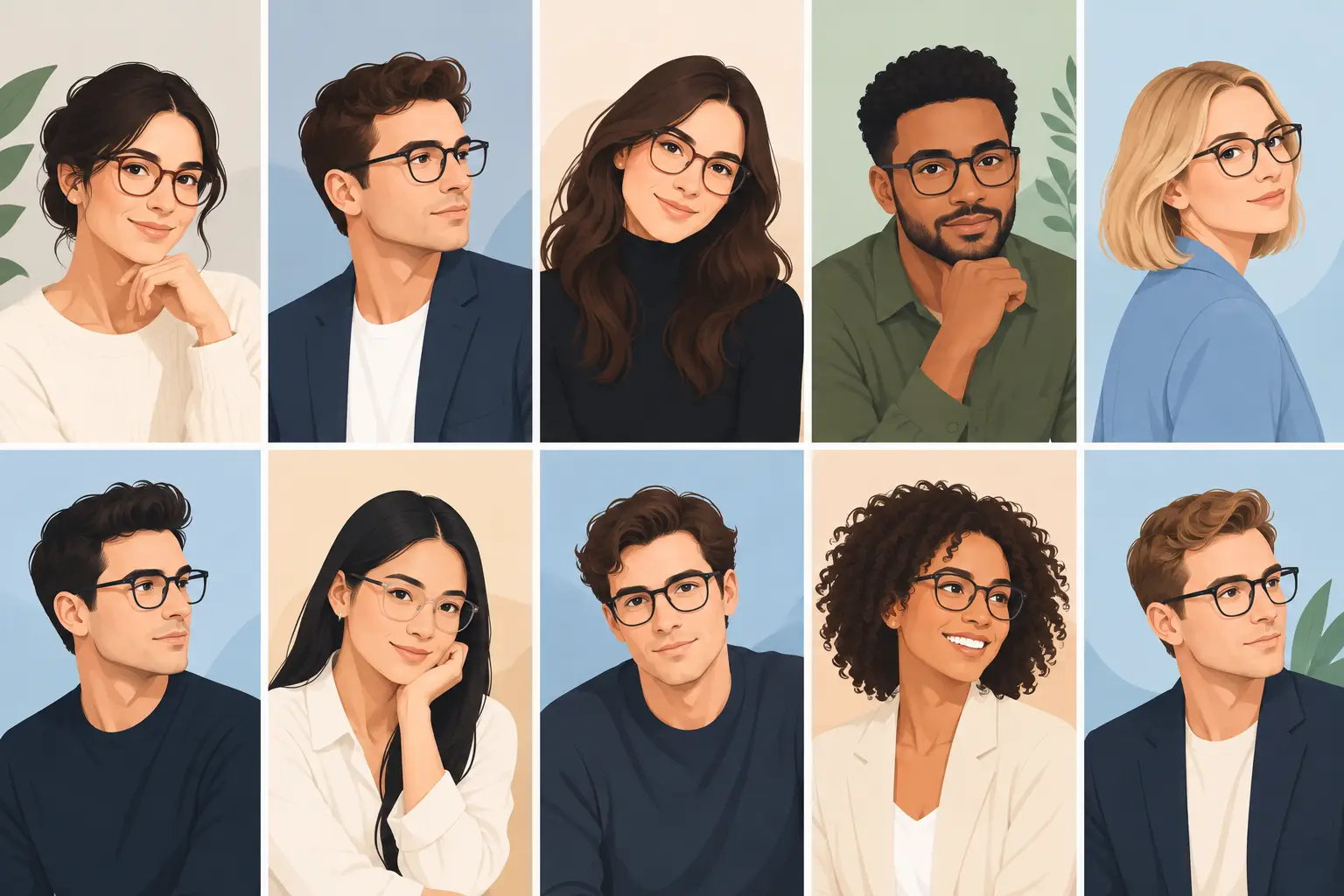
Glasses are not something to hide in a portrait. They are part of your presence: thoughtful, distinctive, polished, and often deeply personal. The best portrait poses for glasses do more than prevent lens glare. They use posture, expression, angle, and intentional lighting to make your frames feel like a natural extension of your style.
For a professional headshot, personal branding session, or milestone portrait, the goal is not to pose around your glasses. It is to create an image where your eyes remain beautifully visible and your confidence comes through without distraction. A skilled photographer will guide every adjustment, so you never have to wonder what to do with your hands, chin, shoulders, or gaze.
Why Glasses Require a More Intentional Portrait Pose
Frames create strong lines around the face, and lenses can reflect a window, softbox, or overhead light in a fraction of a second. That does not make glasses difficult to photograph. It simply means the smallest refinements matter more.
A slight turn of the head can reduce reflection while adding shape to the jawline. A gentle shift of the chin can help the eyes appear open and engaged behind the lenses. The right pose also keeps frames from sitting unevenly or dominating the image. In a refined portrait, people should notice your expression first, then appreciate the details that make the image unmistakably yours.
Your frame style matters, too. Delicate wire frames, bold acetate shapes, cat-eye silhouettes, and rimless glasses each create a different visual effect. There is no single pose that flatters everyone. The most beautiful result comes from matching the pose to your features, wardrobe, frame shape, and the purpose of the portrait.
10 Best Portrait Poses for Glasses
1. The Soft Three-Quarter Turn
Turn your body slightly away from the camera, then bring your face back toward the lens. This classic three-quarter position adds dimension to the shoulders and face while giving the photographer room to control reflections in your lenses.
Keep your chin level or lowered just a touch. Looking directly into the camera from this position creates a confident, approachable image that works beautifully for headshots and branding portraits.
2. The Seated Lean-In
Sit near the front edge of a chair or stool and lean forward very slightly from the waist. The movement is subtle, but it brings warmth and engagement to the portrait without feeling overly posed.
This is especially flattering for women who want a polished but conversational look. Resting one forearm lightly on your thigh or placing a hand near the elbow creates purpose for the hands and keeps the pose elegant.
3. The Shoulder-Forward Portrait
Bring one shoulder a little closer to the camera while keeping the face softly turned back toward the lens. This pose creates a graceful line through the neck and collarbone, and it works especially well with tailored jackets, draped blouses, and dresses with a clean neckline.
For glasses wearers, the position helps avoid a perfectly flat, straight-on lens angle, where reflections are more likely to appear. The effect is poised and editorial rather than stiff.
4. The Gentle Chin Dip
A modest chin dip can make a portrait feel intimate, self-assured, and quietly powerful. The key is restraint. Lowering the chin too far can cause the upper rims of the glasses to obscure the eyes or catch unwanted light.
When done well, this pose encourages you to look up through your eyes rather than tilt your whole face upward. It is a beautiful choice for close portraits where the goal is to capture character and connection.
5. The Side Gaze
Not every meaningful portrait requires direct eye contact with the camera. Looking just beyond the lens, toward a window, or toward a thoughtfully placed light can create a reflective, sophisticated feeling.
A side gaze is particularly lovely for personal branding images with a softer narrative. It suggests focus, vision, and ease. The photographer should keep your face turned enough toward the light that both eyes remain visible behind the glasses.
6. The Relaxed Standing Pose
Stand with your weight settled into one leg and the opposite knee softened. This prevents the squared-off stance that can make anyone feel rigid in front of the camera. Angle your body slightly, relax the shoulders, and allow one hand to rest naturally at your waist, in a pocket, or against the side of your jacket.
This pose is versatile for full-length and three-quarter portraits. It also gives the photographer flexibility to adjust light and camera height for glare-free lenses.
7. The Hand-to-Frame Gesture
A light touch near the temple of your glasses can look intelligent and effortless when it is brief and natural. Think of adjusting your frames, not holding them in place. Your fingertips should barely make contact, and your hand should remain soft.
This gesture is ideal for branding portraits, particularly for consultants, attorneys, creatives, and entrepreneurs who want an image with a sense of thoughtfulness or motion. It is less suited to a formal headshot where a clean, timeless expression is the priority.
8. The Over-the-Shoulder Look
Turn your body away from the camera, then look back over the shoulder with a relaxed expression. This creates movement and can be striking for fashion-forward portraits, milestone sessions, and boudoir imagery.
Because the face is turned, lens reflections are often easier to manage. The photographer will guide the precise degree of rotation, since moving just an inch too far can make one lens appear much more prominent than the other.
9. The Seated Profile-Inspired Pose
Sit sideways on a chair or bench, with your torso angled away and your face returned partway toward the camera. This creates an elegant, lengthened line and allows glasses to become a refined part of the composition.
It is a flattering option for women who prefer a more relaxed, editorial feel over a traditional front-facing portrait. A softly placed hand at the collarbone, wrist, or lap can add quiet grace without drawing attention away from the face.
10. The Natural Laugh or Conversation Moment
Some of the most compelling portraits happen between formal poses. A genuine smile, a moment of laughter, or a quiet response to the photographer can soften the eyes and bring real life to the image.
With glasses, these moments are especially valuable because they prevent the portrait from feeling overly controlled. The frames remain part of your look, but your warmth becomes the focus.
Pose Adjustments That Keep Your Eyes Visible
The best pose can still fall flat if glare covers the eyes. Fortunately, glare is usually a lighting and angle issue, not a reason to remove your glasses. A professional photographer may raise or lower the light, change the camera position, ask you to angle your temples slightly, or adjust the tilt of your chin.
A very small downward tilt of the glasses themselves can sometimes reduce reflection, but this should be done carefully. Frames must still sit naturally and evenly on the face. If an adjustment makes the glasses look crooked, it is not worth the trade-off.
Camera height also matters. A photographer shooting slightly above eye level can be flattering, but the exact position depends on your lenses and face shape. There is no universal rule that says every glasses wearer should look up, down, or turn to one particular side. Expert direction is about observing what works in the moment.
Styling Glasses for a Luxury Portrait Session
Treat your frames as part of the wardrobe. Clean the lenses thoroughly before your session, including the corners and nose pads where fingerprints and makeup can collect. If you own more than one pair, bring options. A subtle pair may suit a classic headshot, while a bolder frame might elevate a personal branding image or expressive portrait.
Consider whether your glasses complement your clothing palette. Dark frames can create beautiful definition against lighter garments, while translucent or metallic frames often feel softer and more delicate. If you wear progressive or strongly reflective lenses, let your photographer know ahead of time. It allows extra time for precise lighting adjustments.
Hair and makeup should support the eyes rather than compete with the frames. Defined lashes, softly groomed brows, and intentional color around the face can make the eyes read clearly in photographs. The effect should still feel like you, only more polished and camera-ready.
When to Photograph Without Glasses
Some clients choose a few portraits without glasses and others with them. This can be useful if you wear glasses daily but also want flexibility for different professional contexts. For example, a branding gallery may include both a direct, glasses-on authority portrait and a softer, glasses-free lifestyle image.
Still, if glasses are part of how you move through the world, there is no reason to leave them out of your signature images. A portrait should reflect your identity, not ask you to edit it away. At Franklin Photography Studios, the experience is designed around thoughtful direction and precise lighting, so every detail supports the way you want to be seen.
Bring the frames that feel most like you, then allow the pose to follow your natural presence. When your eyes are lit beautifully, your posture feels grounded, and your expression is genuine, glasses become more than an accessory. They become part of the story your portrait will treasure for a lifetime.
Leave a Reply