
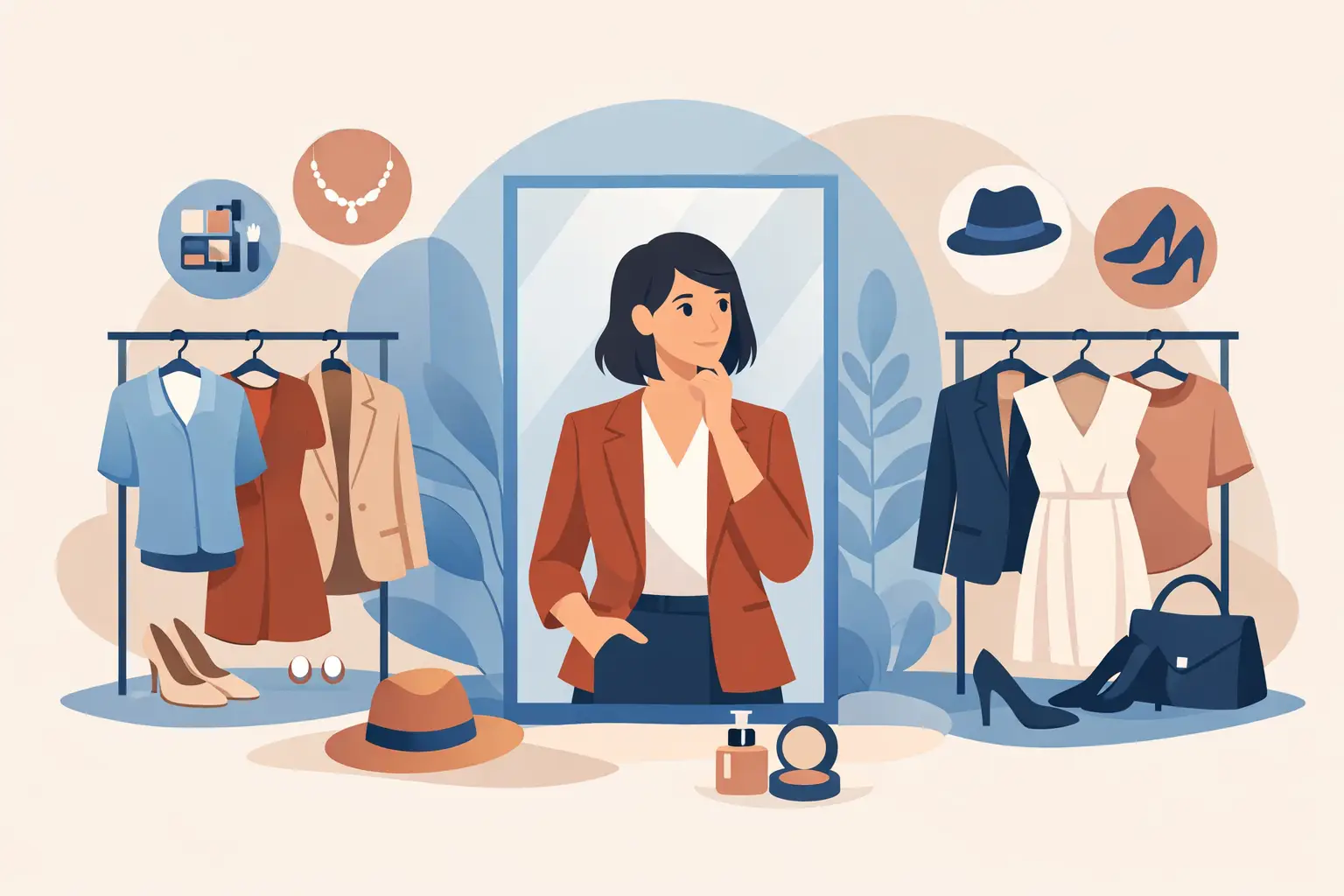
The dress that looks beautiful on a hanger is not always the dress that tells your story in a portrait. The most successful images begin with clothing that feels like an elevated version of you: considered, comfortable, and aligned with the way you want to be seen. Knowing how to choose a portrait wardrobe is less about following a rigid list of rules and more about selecting pieces that support your confidence before you ever step in front of the camera.
A thoughtful wardrobe helps the eye stay where it belongs – on your expression, your presence, and the details that make the portrait distinctly yours. Whether you are preparing for a milestone portrait, personal branding session, maternity session, or an heirloom family image, the goal is the same: choose clothing that allows your essence to come forward.
Start With the Feeling You Want Your Portraits to Hold
Before considering color or silhouette, consider the purpose of the photographs. A portrait can celebrate reinvention, mark a season of motherhood, establish professional authority, or preserve a connection across generations. Your wardrobe should echo that intention.
For a personal portrait, you may want softness, strength, elegance, or a sense of creative freedom. For branding imagery, the feeling may be polished, approachable, decisive, or visionary. Boudoir wardrobe calls for a different conversation entirely, often centering on sensuality, texture, and the parts of yourself you are ready to celebrate. When you identify the emotional direction first, choices become far more focused.
This does not mean your clothing must be overly formal. A beautifully tailored black blouse, refined trousers, and meaningful jewelry can feel every bit as powerful as a gown. Conversely, a flowing dress can create movement and romance that a structured suit cannot. The right choice depends on the story you want to treasure for a lifetime.
How to Choose a Portrait Wardrobe by Focusing on Fit
Fit is often more influential than size. A garment that skims the body well and lets you move comfortably will photograph with greater ease than something that is technically your size but pulls, gaps, rides up, or requires constant adjustment.
Choose pieces that define your shape without restricting it. A waistline, a tailored shoulder, a softly draped neckline, or a well-cut jacket can create structure and polish. If you prefer more coverage, look for intentional design rather than simply adding volume. A long sleeve with a graceful cuff, a high neckline with an open back, or a flowing skirt paired with a fitted top can feel sophisticated while still revealing your silhouette.
Pay close attention to the fit while sitting, standing, and turning. Portrait sessions involve subtle shifts in posture, and you should never be distracted by a strap that slips or a waistband that pinches. If you need to tug, smooth, or conceal the garment every few minutes in a fitting room, it will likely ask for the same attention during your session.
For women over 50 especially, the most flattering clothing is rarely about hiding. It is about choosing shape, fabric, and proportion with intention. Clothing that honors your body as it is now creates a more authentic, commanding portrait than a trend that does not feel like you.
Consider Necklines and Sleeves in the Frame
The portrait frame gives particular attention to the face, shoulders, and upper body. Necklines matter because they guide the viewer’s eye. V-necks and open necklines can create length and softness, while bateau, square, and higher necklines can feel architectural and refined. The best option is one that suits both your comfort level and your features.
Sleeves can also be beautifully expressive. Three-quarter sleeves often photograph elegantly and offer a clean visual line. Off-the-shoulder styles may bring a romantic, feminine quality, while a structured blazer can convey confidence for executive headshots and branding portraits. There is no single universally flattering neckline or sleeve. The strongest choice is one you can wear without self-consciousness.
Choose Colors That Support Your Skin Tone and Your Story
Color should complement your complexion rather than compete with it. Rich jewel tones, warm neutrals, softened pastels, deep navy, cream, emerald, burgundy, and charcoal often photograph beautifully because they have depth. The best shade is not necessarily your favorite color in theory. It is the one that makes your skin look luminous and your eyes appear present.
When in doubt, hold the garment near your face in natural light. Does your complexion look clear and rested, or does the color cast shadows and draw attention to redness or under-eye circles? This simple comparison often gives a more useful answer than a color trend ever could.
Very bright white can sometimes reflect strongly into the face, particularly in studio lighting, while stark black can feel dramatic and sophisticated but may lose detail if every element of the outfit is dark. Neither is off-limits. The distinction lies in styling. A black dress with textured fabric, a defined neckline, or a luminous earring can feel dimensional. A cream blouse can be softened with warm layers, tonal accessories, or a contrasting bottom.
For personal branding portraits, consider your brand palette without feeling obligated to dress head to toe in a logo color. A founder whose visual identity includes terracotta might choose a warm rust blouse, a neutral jacket, or accessories that quietly reference that color. The portrait should feel cohesive with your business, but it should still look like a person, not a marketing template.
Let Fabric Add Dimension
Cameras notice texture. Silk, satin, cashmere, linen blends, velvet, lace, fine knits, and matte crepe can add depth that makes an image feel more luxurious. Texture is especially useful when you are choosing a neutral palette. Cream trousers paired with a smooth silk blouse and a textured jacket, for example, can look far more intentional than a single flat color from head to toe.
At the same time, avoid fabrics that wrinkle immediately, cling in places that make you uncomfortable, or reflect light unpredictably. Extremely shiny materials can be striking in the right setting, but they are less forgiving than matte or softly luminous fabrics. If you love a statement piece, balance it with simpler elements so the portrait remains centered on you.
Plan More Than One Look When the Session Allows
One outfit can create a beautiful portrait. Two or three thoughtfully distinct looks can create a fuller visual story. This is especially valuable for branding sessions, where you may need imagery that feels polished and executive alongside images that are more warm, creative, or conversational.
Think in contrasts rather than random options. You might pair a tailored dress with a relaxed blouse and trousers, or a formal gown with a simple black top and jeans. For maternity portraits, one flowing, expressive look may be balanced by a more intimate and minimal option. Each look should reveal a different facet of you while remaining connected to the overall feeling of the session.
Bring garments on hangers, along with the right shoes, undergarments, and accessories. Nude, well-fitting undergarments are often essential, particularly beneath lighter fabrics or fitted clothing. The right foundation changes how a garment falls, and it can make the difference between an outfit that feels merely acceptable and one that feels exceptional.
Keep Accessories Intentional
Accessories should complete the portrait, not overwhelm it. Statement earrings, a sculptural ring, a delicate necklace, a meaningful watch, or a beautiful hat can add personality and visual interest. Choose pieces that fit the scale of your clothing and do not distract from your face.
For family or generational portraits, coordination is more elegant than matching. Select a shared palette with a few complementary tones, then allow each person to wear a silhouette that suits them. Avoid placing everyone in identical shirts or overly busy patterns. The result should feel like a family with a point of view, not a uniform.
Pet portraits benefit from the same principle. If your pet has a vibrant coat or a distinctive collar, build your outfit around colors that complement rather than compete with them. The emotional connection will remain the focus, and the styling will feel harmonious.
Trust Professional Guidance, Then Make It Your Own
The finest wardrobe choices are collaborative. Professional styling guidance can help you identify colors, silhouettes, and combinations you may not have considered, while hair and makeup complete the portrait with a camera-ready polish that still feels like you. At Franklin Photography Studios, wardrobe planning is part of a carefully guided experience designed to help every client arrive feeling prepared and beautifully seen.
Still, the final decision should feel personal. Wear the dress that makes you stand taller. Bring the blazer that reminds you of the career you built. Include the jewelry passed down by someone you love. These details carry meaning beyond style, and that meaning is visible in a portrait.
Choose clothing that gives you room to breathe, move, and recognize yourself with pride. When you feel at home in what you are wearing, the camera has something far more valuable to capture: your confidence, fully present.