
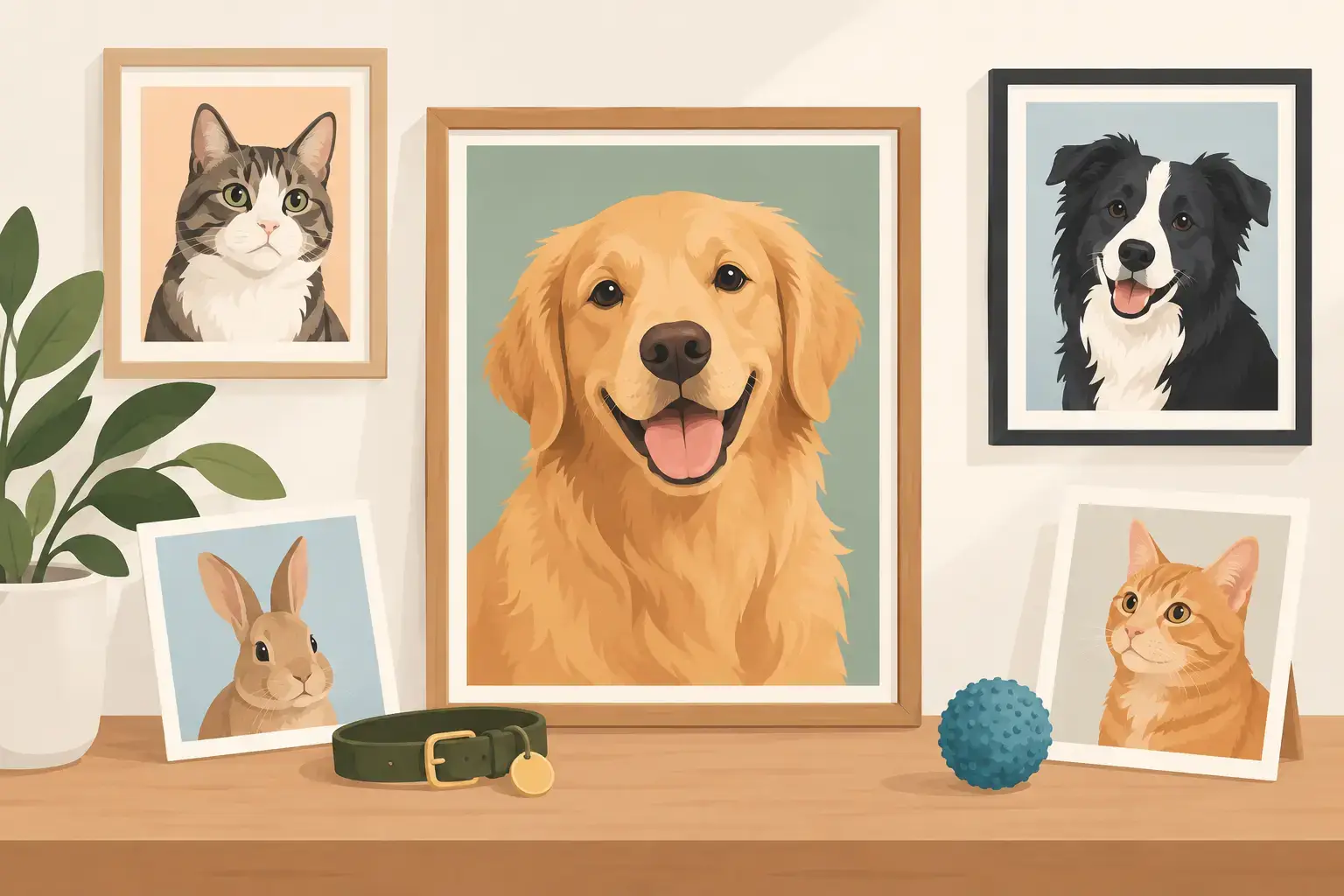
The best ideas for pet portraits do not begin with a prop or a pose. They begin with the small, unmistakable details that make your companion yours: the alert tilt of a terrier’s head, the dignified stillness of an older dog, the opinionated gaze of a cat, or the way a beloved horse leans closer when it recognizes your voice. A meaningful portrait preserves personality, not just appearance.
For pet owners who value beautiful artwork and a guided experience, the goal is not to make an animal behave like a person. It is to create an environment where their character can come forward naturally. The most successful portraits balance thoughtful styling with patience, expert lighting, and enough room for genuine connection.
The Best Ideas for Pet Portraits Begin With Personality
Before choosing a setting, consider the story you want the finished portrait to tell. Is your pet elegant and composed, playful and impossible to contain, quietly devoted, or wonderfully eccentric? A sleek black background may suit a regal Doberman beautifully, while a soft sunlit setting can feel more fitting for a golden retriever who lives for morning walks.
There is no single “right” look. A studio portrait offers polish, control, and a timeless result. An outdoor portrait can bring movement and a sense of place. A portrait at home may hold special meaning for a pet who is most relaxed in familiar surroundings. The best choice depends on your pet’s temperament and the artwork you envision living in your home.
1. Choose a Refined Studio Portrait
A clean studio portrait places every bit of attention on your pet’s expression, form, and distinctive markings. With intentional lighting and an uncluttered backdrop, even a simple seated pose can become striking wall art. This approach is especially beautiful for pets with expressive eyes, dramatic coats, or a calm presence.
A dark, neutral backdrop creates a formal, gallery-inspired feeling, while lighter tones can feel airy and contemporary. The difference is not merely decorative. Background color changes how a coat reads, how eyes stand out, and whether the finished work feels dramatic or soft.
For pets that become distracted outdoors, the studio can also be the kinder choice. A calm room, minimal noise, patient direction, and time for breaks often produce a more relaxed expression than an exciting park full of competing scents and sounds.
2. Include the Hands That Love Them
Some of the most emotionally resonant pet portraits do not require a full human portrait. A hand resting gently on a dog’s shoulder, a woman seated beside her cat, or boots next to a horse’s hooves can tell a deeply personal story without shifting focus away from the animal.
This idea works particularly well for women who want to celebrate the relationship itself. Your pet may be part of a new chapter, a family legacy, a season of healing, or the everyday rhythm that has carried you through life. A portrait that includes you, even subtly, gives that bond a place in the frame.
If you prefer a more editorial look, coordinate your wardrobe with the intended palette rather than matching your pet exactly. Rich neutrals, soft textures, and clean lines photograph beautifully and keep the finished image timeless.
3. Create a Portrait Around Your Pet’s Signature Expression
Every pet has a look their family knows immediately. Perhaps it is the earnest face they make before dinner, the ears-forward curiosity when they hear a treat bag, or the sleepy contentment that appears only after a long walk. Planning around that expression is often more valuable than planning around an elaborate theme.
A skilled photographer watches for those brief, authentic moments. Treats, toys, sound cues, and the familiar reassurance of an owner can help invite them, but timing matters more than forcing a reaction. Pets rarely need to be perfectly still to be beautifully photographed.
For a senior pet, gentler pacing is especially important. Their slower movements, silver muzzle, and wise gaze are not details to disguise. They are the very details that make the portrait irreplaceable.
4. Use a Meaningful Object With Restraint
A favorite blanket, a well-worn tennis ball, a leather collar, or a child’s small hand-knit scarf can add history to a portrait. The key is restraint. One object with real emotional value is more powerful than a crowded set filled with novelty props.
Consider whether the item will still feel meaningful years from now. A cherished toy may make perfect sense for a puppy portrait. For a more enduring, formal image, a beautiful collar or a simple heirloom textile may be the stronger choice. The object should support the story, not compete with your pet’s face.
5. Let Motion Be Part of the Art
Not every exceptional pet portrait is still. A dog running toward the camera, ears lifting in a breeze, or shaking off water can create an image full of joy and energy. These portraits feel alive because they honor how a pet moves through the world.
Motion photography demands more planning than it appears to. It requires fast, precise technical execution and a safe environment, particularly with excited dogs. It may not be ideal for every animal, but for a spirited puppy, athletic breed, or pet with a delightfully exuberant personality, the result can become a favorite piece of art.
In the Arizona heat, early morning, shaded locations, and shorter outdoor sessions are often the most comfortable options. Your pet’s wellbeing should always direct the plan.
6. Photograph the Quiet Everyday Moment
There is elegance in the ordinary when it is seen well. A cat curled in a sunlit window, a dog resting beside a favorite chair, or a horse standing quietly in its stall can become a portrait of home, comfort, and companionship.
Lifestyle portraits work best when the setting is visually simple and emotionally true. You do not need a picture-perfect house or a large property. A single beautiful corner, thoughtful styling, and careful use of natural or supplemental light can turn a familiar scene into something worthy of display.
The trade-off is control. At home, backgrounds and lighting can be less predictable than in a studio. Yet for a pet who is anxious in new places, the comfort of home may be worth far more than a perfectly blank backdrop.
7. Celebrate the Scale of Your Bond
A portrait of a tiny dog tucked into the curve of your arm feels entirely different from a portrait standing beside a Great Dane or horse. Scale can communicate tenderness, protection, humor, strength, or companionship. Thoughtful posing makes those visual contrasts feel intentional rather than accidental.
For mother-and-daughter portraits, generational sessions, or a personal portrait experience, including a pet can make the final collection feel more complete. They are often the family member who has witnessed every version of you. Their presence can soften a formal portrait and bring a natural warmth to the session.
8. Choose a Color Story That Complements Their Coat
Color is one of the quiet decisions that separates a pleasant photograph from a polished portrait. Warm camel, cream, olive, and soft blush may flatter a golden or reddish coat. Charcoal, navy, and jewel tones can create sophistication around black, gray, or white fur. A photographer can guide these choices based on your pet’s coloring, your wardrobe, and where the artwork will be displayed.
Avoid choosing a background or outfit that makes your pet disappear. A black dog against a dark backdrop can be breathtaking with expert lighting, but it requires enough separation to preserve the shape and texture of the coat. Similarly, a pale pet against white can look luminous when handled with care, not washed out.
9. Make Room for Imperfection
A crooked ear, a visible scar, a tongue that slips out at the most unexpected moment, or a cat who refuses every planned pose can become the image you treasure most. Perfection is not the standard. Recognition is.
This is where a full-service portrait experience makes a difference. Rather than rushing to capture a single obedient frame, the session allows space to observe, reset, and work with your pet’s personality. At Franklin Photography Studios, the intention is to create artwork that feels elevated while remaining true to the animal you love.
10. Plan for the Art Before the Session
One of the best ideas for pet portraits is also one of the most practical: decide how you want to enjoy the photographs before they are created. A dramatic single image may belong above a fireplace. A collection of smaller portraits may suit a hallway or dressing room. A refined album can preserve several expressions and moments in one heirloom piece.
This decision influences everything from orientation to color palette. A vertical portrait may be ideal for a narrow wall, while a horizontal image can beautifully anchor a sofa or bed. When the final artwork is considered from the beginning, the session feels purposeful and the result has a natural home.
Your pet will not remain exactly as they are now. That is not a reason to wait for a more convenient season, a better coat, or a perfectly trained moment. Choose the idea that feels most like them, prepare with care, and let the portrait hold onto the presence you want to remember for a lifetime.
Leave a Reply