
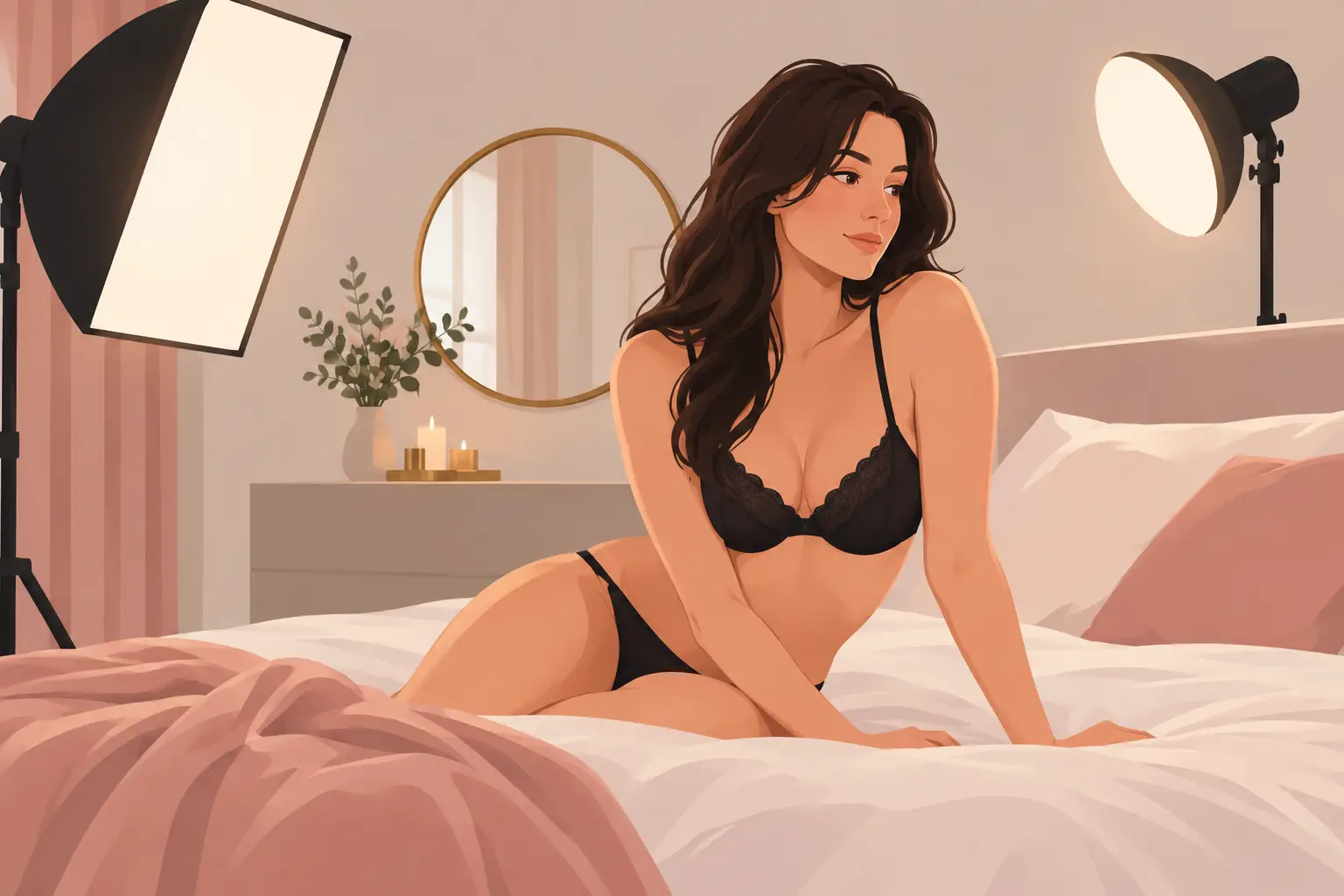
The most beautiful boudoir portraits do not depend on one “perfect” light setup. They depend on light that honors the woman in front of the camera. Knowing how to choose boudoir lighting begins with a more personal question: how do you want to feel when you see your images? Soft and romantic, sculpted and editorial, powerful and dramatic, or luminous and effortless? Your answer shapes every creative choice that follows.
At a full-service boudoir session, lighting is never an afterthought. It works alongside wardrobe, posing, hair and makeup, set design, and image finishing to capture your essence with refinement. The goal is not to disguise who you are. It is to shape the frame in a way that celebrates your confidence, curves, skin, expression, and individuality.
How to Choose Boudoir Lighting for Your Desired Mood
Lighting establishes the emotional temperature of a portrait before viewers notice a single detail. A bright, airy image can feel fresh and intimate. Deep shadows and a narrow pool of light can feel cinematic, private, and undeniably confident. Neither approach is universally more flattering. The right choice depends on your vision, comfort level, and the story you want your portraits to tell.
Soft, diffused light is a beautiful choice for clients who want an elegant, timeless result. It wraps gently around the face and body, easing the appearance of texture and creating gradual transitions between highlight and shadow. This style is especially lovely for romantic lingerie, flowing robes, maternity portraits, or images centered on softness and connection.
More directional light creates shape. It can define a shoulder, trace the line of a hip, bring attention to the eyes, or create an arresting silhouette. This approach suits women who are drawn to fashion-inspired imagery, bolder wardrobe pieces, or a mood with a little mystery. Directional light is not about being harsh. When handled with care, it can be exceptionally flattering because it gives the body dimension rather than flattening it.
For many clients, the most compelling gallery includes both. A session may begin with soft, reassuring light as you settle into the experience, then move toward more sculpted images once your confidence is fully present. That progression often feels natural and allows your final collection to have range.
Start With What You Want to Emphasize
Boudoir lighting is a form of visual direction. It guides the eye toward the details you want to celebrate. If your eyes are one of your favorite features, a flattering key light can bring clarity and sparkle to them while keeping the rest of the frame softly understated. If you love the strength in your shoulders or the curve of your waist, side lighting can create graceful definition.
This is also where professional posing and lighting work together. A small adjustment in chin angle, shoulder placement, or the turn of a wrist changes how light falls across the body. A skilled photographer does not simply place a client under a light and hope for the best. She continually adjusts the light and the pose so the image feels intentional from every angle.
If you are concerned about a particular area, share that openly before your session. A thoughtful boudoir experience should make room for honest conversation without judgment. You may prefer light that minimizes emphasis on texture, or you may want a pose and shadow pattern that creates more contour. Those preferences are valuable creative direction, not something to apologize for.
Consider Your Skin Tone, Makeup, and Wardrobe
The most flattering lighting is responsive to the person being photographed. Skin tone, makeup finish, hair color, and wardrobe fabrics all influence the final image. A luminous makeup look may glow beautifully under soft light, while a more defined eye and rich lip can hold their own in a dramatic, lower-key portrait.
Wardrobe matters just as much. Satin, silk, sequins, leather, lace, and sheer fabrics each reflect or absorb light differently. A pale silk robe can look ethereal near a large soft light source. A black bodysuit can become beautifully sculptural when rim light separates it from a dark background. Jewelry, too, benefits from intention. A small catch of light on a necklace or earring can look luxurious; too much direct reflection can become distracting.
This is one reason a guided wardrobe consultation is so valuable. Rather than selecting pieces based only on what looks beautiful on a hanger, consider how each item will photograph in your chosen setting and lighting style. The best choice is usually the piece that makes you stand taller before the camera ever comes out.
Soft Light Is Not the Only Gentle Choice
Many women assume soft, bright lighting is the only safe option. It is forgiving, but it is not the sole path to a flattering portrait. Strategic shadows can be remarkably kind. They create dimension, simplify a frame, and allow the viewer to focus on expression, movement, and silhouette.
A darker image also does not have to feel severe. It can feel warm, intimate, and sophisticated when the highlights are placed with precision. The distinction comes down to control. Poorly placed shadows can obscure features or make an image feel accidental. Expertly shaped shadows feel deliberate and artful.
Think About the Setting and the Final Artwork
A lighting choice should make sense within the environment. Window-inspired light pairs naturally with a bedroom set, an upholstered chaise, or a delicate robe. More dramatic studio lighting can elevate a sleek backdrop, statement chair, or editorial wardrobe. When the set, styling, and light are aligned, the image feels polished rather than staged.
It also helps to consider how you want to enjoy your portraits after the session. If you envision a fine-art album with a romantic, cohesive flow, a consistent lighting palette can create a beautiful visual story across the pages. If you want one statement piece for a private space, you may be drawn to a striking black-and-white portrait or a silhouette with stronger contrast.
There is a practical trade-off here. Very dark images can be exquisite in print, but they need careful production so shadow detail remains rich rather than muddy. Bright, high-key images may feel open and modern, yet they require clean styling and thoughtful exposure to retain texture in pale fabrics and highlights. A professional studio considers the finished art, not only the preview on a camera screen.
Trust the Process, but Bring Your Preferences
You do not need to arrive knowing lighting terminology. You do not need to decide whether you prefer butterfly lighting, split lighting, or feathered light. What you do need is a sense of the emotional result you are hoping for. Save a few images that speak to you, notice whether you are attracted to brightness or shadow, and pay attention to whether the expressions feel playful, serene, sensual, or powerful.
Then let your photographer translate that feeling into a technical plan. The best boudoir lighting is adaptable. It responds to your comfort in the moment, the way a favorite outfit moves, and the expressions that emerge when you begin to relax. An experienced photographer will read those details and make adjustments that protect both the mood and your confidence.
At Franklin Photography Studios, the boudoir experience is designed to feel fully guided, from professional styling through the final portrait. That guidance allows you to be present rather than self-conscious about whether you are standing in the right place or making the right expression.
Choose Light That Feels Like You
There is no rule that says boudoir must be bright and dreamy, dark and dramatic, or anything in between. The most meaningful portraits are not created by following a trend. They are created when the lighting supports the version of yourself you are ready to see: elegant, sensual, strong, playful, serene, or all of the above.
Choose lighting that gives you permission to take up space. When every creative detail is shaped around your personal vision, your portraits become more than beautiful photographs. They become a lasting reminder of how it felt to showcase your confidence without holding anything back.
Leave a Reply